Electronic Inclinometer
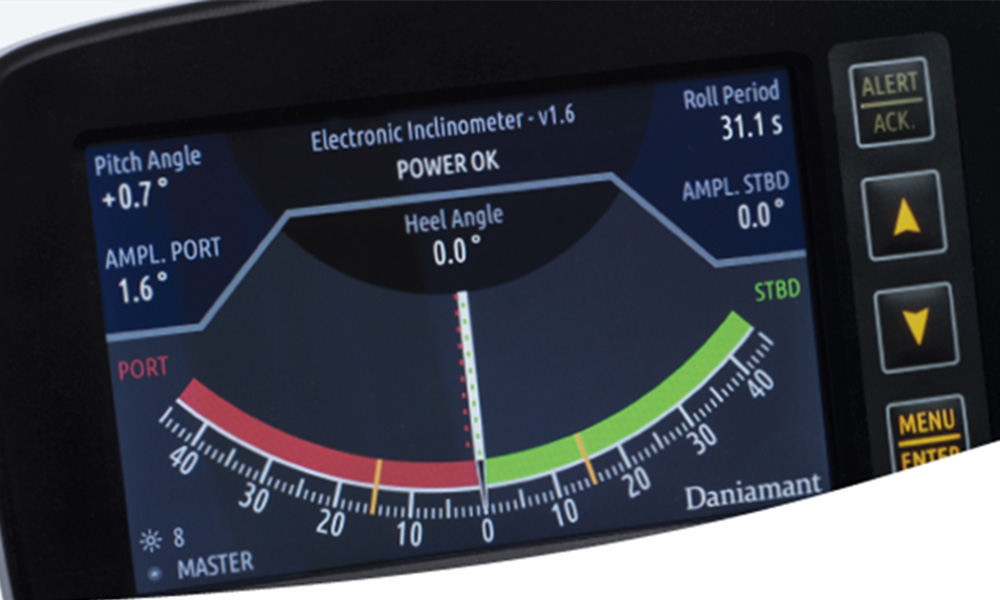
◆DANIAMANT Electronic Inclinometer
Press Release(PDF)
Equipment Overview:
・The IMO mandated the installation of “electronic inclinometers” on container ships and bulk carriers with a gross tonnage of 3,000 tons or more built on or after January 1, 2026.
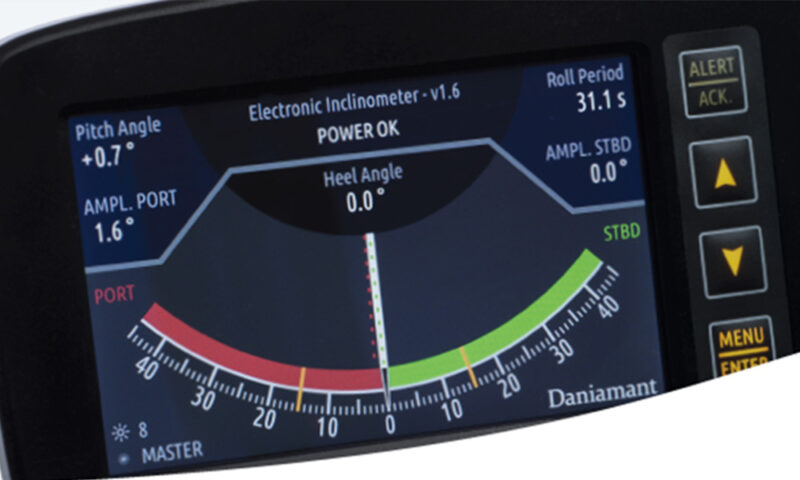
・Measures the ship’s roll angle and roll period and displays them on the bridge.
・Performance standards have been established for devices that record data in the Navigation Data Recorder (VDR).
Background and Purpose of Installation:
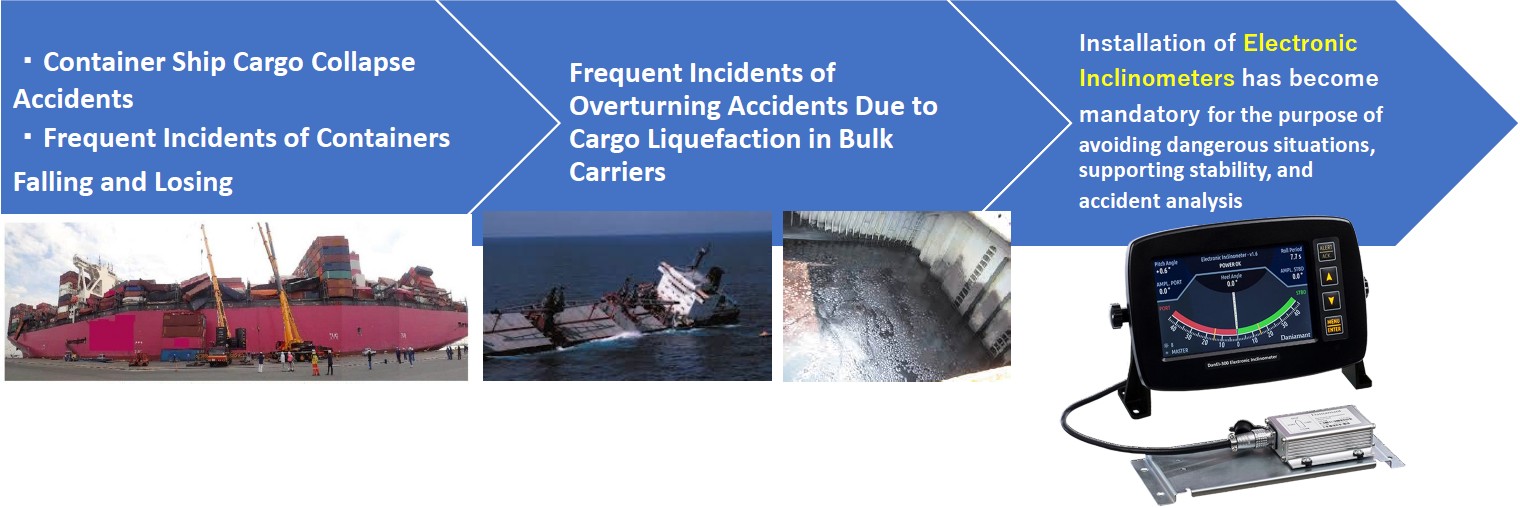
Purpose of Installation:
・To provide information on the ship’s inclination to the captain and other operators.
・To support appropriate decision-making regarding navigation.
・To understand the ship’s inclination in the event of a maritime accident and use this information for accident investigation and analysis.
Performance Standards:
Compliant with MSC.363(92), ISO 19697:2025, IEC 61162-1 & 2, and IEC 61162-450 interface.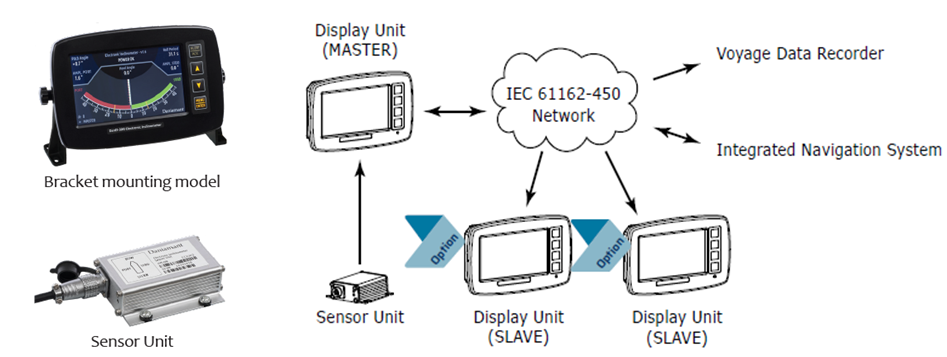
- BOSMEC is the Japanese distributor for Daniamant, a Danish company.
- Certifications: MED/DNV certified, BSH type approval obtained, JG application pending.
- Detection Principle: Based on state-of-the-art MEMS (Micro Electro Mechanical Systems) technology, the sensor unit incorporates a high-precision 6-degree-of-freedom MEMS sensor (3-axis accelerometer + 3-axis gyroscope) as a motion sensing element. The sensor does not require periodic calibration.
- Display Unit Installation Location: Recommended location is within the navigation bridge. It features a bidirectional interface for transmitting alarms from the electronic inclinometer to an external system (BAM/INS) and for confirming and silencing warnings from the external system.
- Sensor Unit Installation Requirements: Mount the sensor unit horizontally, aligned with the ship’s axis (it does not need to be mounted on the ship’s centerline).
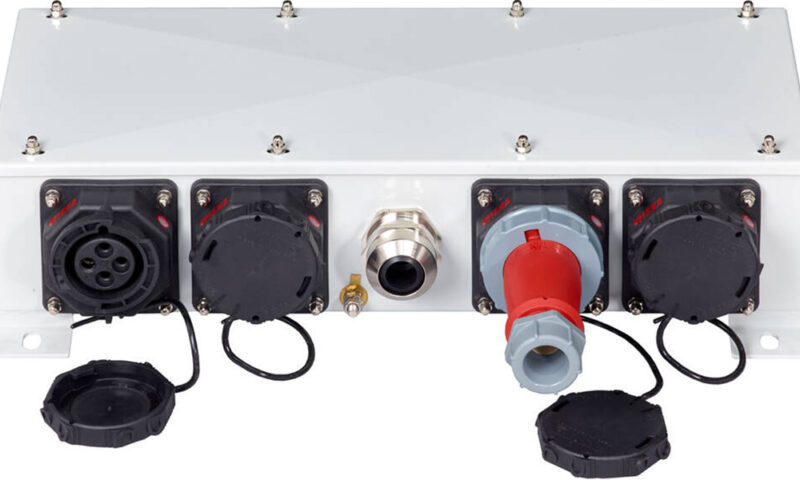
- The sensor unit measures tilt angle, pitch angle, turning speed, and acceleration in real time, and transmits the data to a VDR or similar device via an RS-422/485 serial interface. Tilt angle and pitch angle data are calculated using raw data from both the accelerometer and gyroscope, employing advanced sensor fusion and motion processing algorithms. This ensures reliable estimation of the ship’s attitude even with various linear and rotational motions, allowing measurements in all situations the ship might encounter. The sensor unit also provides turning speed measurement data, which represents changes in direction at regular time intervals.
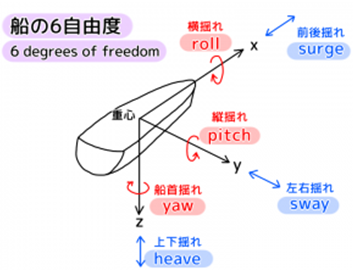
- Acceleration data for all three axes is also available and can be used to evaluate the ship’s linear motion. A ship’s motion consists of six aspects: reciprocating motion along the X, Y, and Z axes (three), plus rotational motion around each axis (three). This is called the ship’s six degrees of freedom and is deeply related to the ship’s performance.