
We provide comprehensive engineering services for the shipbuilding, shipping, and offshore sectors,
with a focus on marine electrical systems and EPPI.

Business and Solutions

GRE Piping layout and Engineering,
EGCS/SOx Scrubber and BWMS Integration Engineering,

CCTV system engineering,
Maritime Cyber security,
Production design and Detail design

SOLUTION 01

Electric Propulsion System

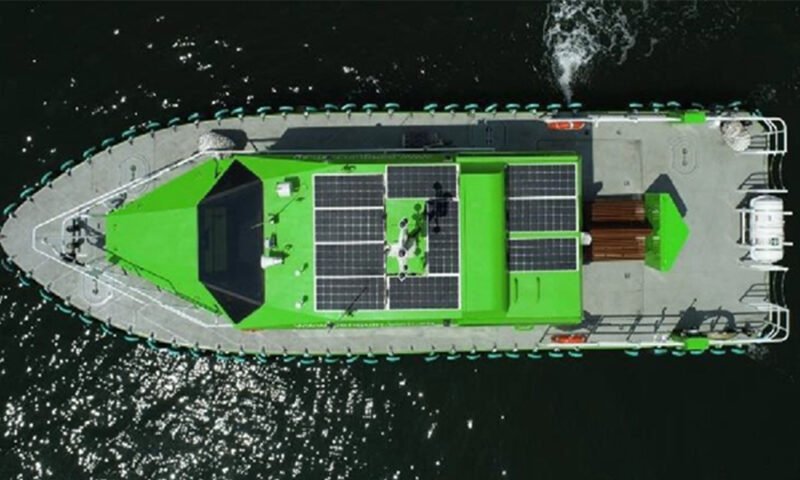
– Electric Propulsion System – ◆Electric Propulsion System engineering: In cooperation with Taiyo Electric – Marine Engineering Department (Electric propulsion system, Inverter control system and Shaft power generation system) ◆Power management: Permanent magnet synchronous PM motor and Inverter system ◆System Design and Procurement: Sea Forrest Power Solutions (our Singapore-affiliated factory) conducted on-site testing by JCI Ministry of Land, Infrastructure, Transport and Tourism in Japan. Centered around the MARINE ENGINEERING (M/E) TEAM established within Taiyo Electric in 2020, four companies – Taiyo Electric, Sanshin Electric Corporation, BOSMEC and Sea Forrest – have formed a one-team to System Design, Procurement and Commission propulsion systems for battery-powered vessels. Battery-powered water bus (built in Ise City, Mie Prefecture) EV procurement and design: Taiyo Electric Electric propulsion system: BOSMEC, Sea Forrest Power Solutions (manufactured by Danfoss Editron) Tokyo, Nihonbashi to Ariake (Service to begin April 2026) Project achievements in Japan: ・USV (Unmanned Surface Vehicle) for JMU Defense Systems ・EV (Electric Vehicle) battery-powered vessel for Kawasaki City Sanitation Bureau ・Battery-powered workboat for Keihin Dock ・Battery-powered water bus vessel for Mitsui Fudosan <DC-grid system image> ◆Design Engineering of small Electric Propulsion vessels and Hybrid electric propulsion vessels BH Global, BOS, Penguin International and other strategic partners have successfully delivered a 15m Launch Boat “Penguin Tenaga” in 2021 that is the joint development of Singapore’s first plug-in hybrid electric propulsion fast launch for the local maritime industry. Main features: Electric propulsion system: PMSR motor manufactured by Danfoss Editron, 46.0 kwh LIB (Lithium-Ion battery) 42.6 kwh, Speed 5 kt with electric propulsion motor alone, maximum speed 24 kt when switched to electric propulsion motor + diesel engine. The electrical converter control supports protocols such as CAN-open communication and SAE J1939 and displays its status.
SOLUTION 02

GRE Piping System

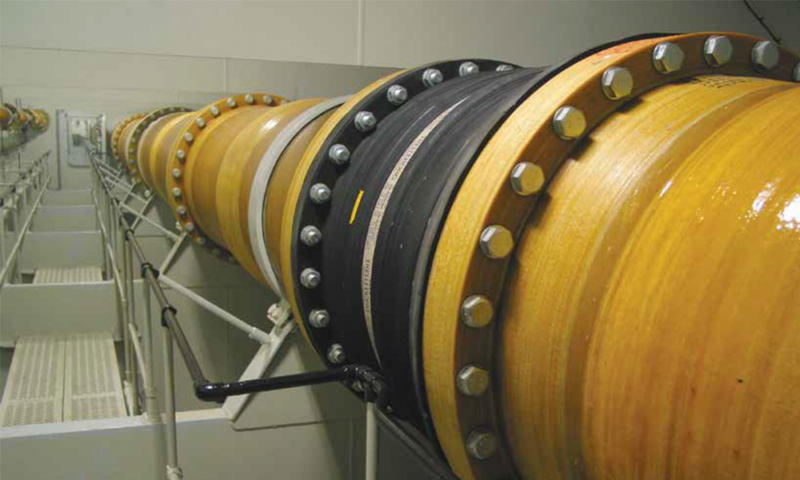
◆ GRE PIPING SYSTEM(Glass-fiber Reinforced Epoxy piping system) GRE Pipe layout and Engineering – FPI GRE Pipe sales and installation agent in Japan Applications: EGCS/SOx scrubber drainage and water supply pipes, DBTM ballast water transfer pipes, offshore wind turbine drainage pipes, TLP ballast water transfer pipes, fire extinguishing piping, bilge piping, cooling water and Fresh water piping, inert gas piping, drinking water, deck cleaning piping, etc. ◆ GRE for DBTM Ballast Line piping system(FIBERMAR™) The overall piping system design, combined with the adoption of GRE couplers/mechanical joints (Rubber Seal Joints: ClassNK type approval TA21349M), allows the couplers to move axially by ±50 mm and accommodate deflection angles up to 1.5 degrees. This provides tolerance (allowable range) for the installation of adjacent pipe materials and offers sufficient flexibility to the pipe system, allowing it to follow the vertical deformation (sagging and hogging) of the hull that occurs during navigation. ◆GRE SLEEVE solution(for EGCS drainage Distance Piece)+Grout application, corrosion prevention Grout application to hull plating
SOLUTION 03

CCTV Surveillance camera system

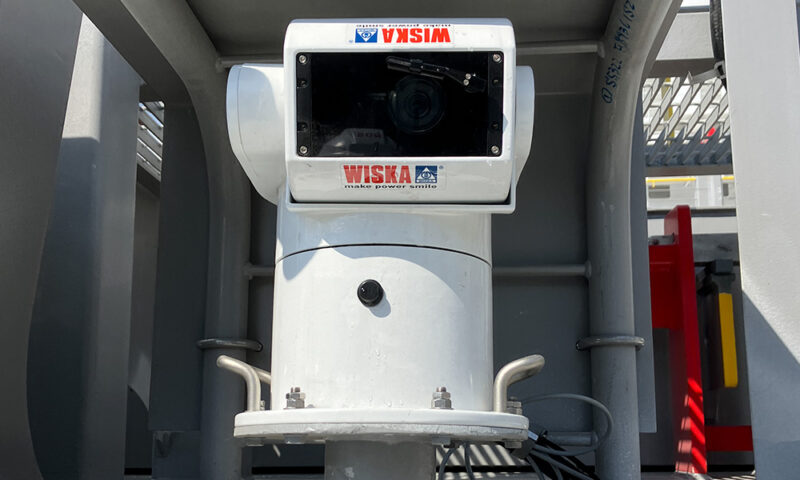
◆ CCTV Surveillance Camera Systems(Design Engineering, Equipment Procurement + Installation) IR Infrared Cameras: In-house developed products of INFRAVISION Technology Pte Ltd (our Singapore affiliate) Infrared cameras installed on Japan Coast Guard patrol boats, etc. (Design Engineering, Installation & Commissioning and Operational Training) Explosion-proof Cameras, Marine CCTV Camera Systems: Design Engineering, Procurement, Installation & Commissioning and Operational Training for WISKA (Germany), i-PRO/Panasonic (Japan), Hanwha (Korea), etc.
SOLUTION 04

Electronic Inclinometer

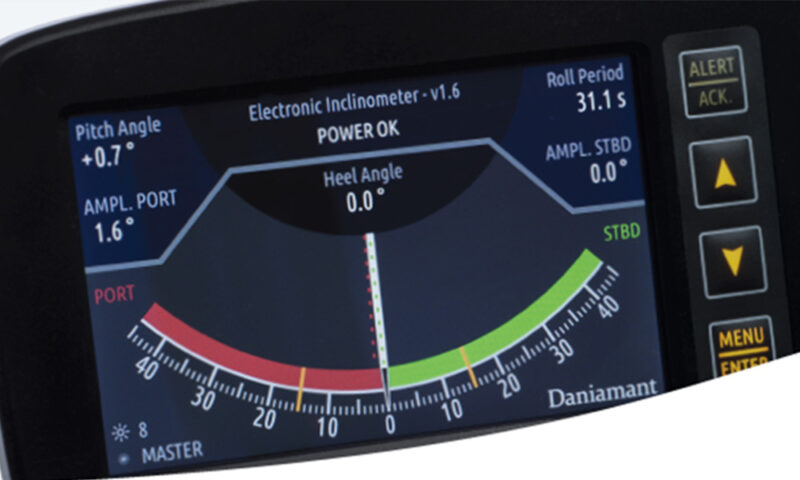
◆DANIAMANT Electronic Inclinometer Equipment Overview: ・The IMO mandated the installation of “electronic inclinometers” on container ships and bulk carriers with a gross tonnage of 3,000 tons or more built on or after January 1, 2026. ・Measures the ship’s roll angle and roll period and displays them on the bridge. ・Performance standards have been established for devices that record data in the Navigation Data Recorder (VDR). Background and Purpose of Installation: Purpose of Installation: ・To provide information on the ship’s inclination to the captain and other operators. ・To support appropriate decision-making regarding navigation. ・To understand the ship’s inclination in the event of a maritime accident and use this information for accident investigation and analysis. Performance Standards: Compliant with MSC.363(92), ISO 19697:2025, IEC 61162-1 & 2, and IEC 61162-450 interface. BOSMEC is the Japanese distributor for Daniamant, a Danish company. Certifications: MED/DNV certified, BSH type approval obtained, JG application pending. Detection Principle: Based on state-of-the-art MEMS (Micro Electro Mechanical Systems) technology, the sensor unit incorporates a high-precision 6-degree-of-freedom MEMS sensor (3-axis accelerometer + 3-axis gyroscope) as a motion sensing element. The sensor does not require periodic calibration. Display Unit Installation Location: Recommended location is within the navigation bridge. It features a bidirectional interface for transmitting alarms from the electronic inclinometer to an external system (BAM/INS) and for confirming and silencing warnings from the external system. Sensor Unit Installation Requirements: Mount the sensor unit horizontally, aligned with the ship’s axis (it does not need to be mounted on the ship’s centerline). The sensor unit measures tilt angle, pitch angle, turning speed, and acceleration in real time, and transmits the data to a VDR or similar device via an RS-422/485 serial interface. Tilt angle and pitch angle data are calculated using raw data from both the accelerometer and gyroscope, employing advanced sensor fusion and…
SOLUTION 05

Maritime Cybersecurity

– Maritime Cybersecurity – Maritime Cybersecurity Our affiliate, Athena Dynamics Pte Ltd (ADPL) in Singapore, has organized a global specialized IT team (GHA/gha: Good Hackers Alliance) that can comprehensively implement cybersecurity measures for onboard network systems, from Identification → Defense → Detection → Response → Recovery, using remote access via satellite communication. ■Specific Cyberattack Methods • Ransomware hijacking of ship management systems • GPS spoofing to falsify location information (a type of cyberattack that misleads GPS location information by transmitting false GPS signals, disrupting ship routes or causing collisions) • Theft of crew members’ personal information through phishing scams, etc. Based on reported cases to date, the following onboard systems are the main targets of cyberattacks. ➣ IT (Information Technology) systems such as PCs for office work on ships ➣ OT (Operation Technology) systems such as navigation equipment, engine control devices, and cargo monitoring devices We can remotely access and conduct Asset Discovery (asset survey) of vessels operated by ship management companies, in accordance with the IMO-mandated cybersecurity standard UR E26. Furthermore, if you install cloud-based software (XDR agent) on the ship’s network from land, our Security Operation Center (SOC) can provide full support, from implementation to operation, maintenance, and 24/7/365 continuous monitoring. There are two mandatory IACS requirements applicable to vessels whose construction contracts are signed on or after July 1, 2024 (for newly built vessels): UR E26 “Cyber Resilience of Ships” UR E27 “Cyber Resilience of Onboard Systems and Equipment” – For newly built ships – – For Existing Vessels – The mandatory requirements of IACS UR E26/27 mentioned above do not apply to existing vessels. However, since cyber risks are the same, cybersecurity measures for the onboard network are necessary. As a countermeasure, we propose a straightforward modification of the onboard network using the following procedure (3…
SOLUTION 06

Reefer Container Socket

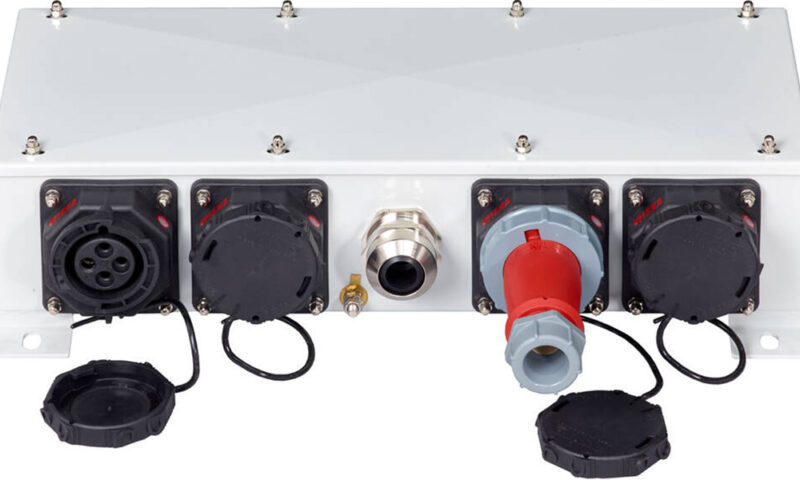
◆WISKA Reefer Container Socket Easy and Safe power supply for reefer containers “Easy and Safe” Safe Push-In Technology: All refrigerated container sockets feature standard Push-In technology, compliant with ISO 1496-2 standards. Power is only supplied when a plug is inserted. Power also automatically shuts off when the plug is removed. Furthermore, an LED indicator shows the current power supply status, ensuring safe and quick use. The VARITAIN® shows how the Push-In technology with LED alert turns any plug into a safe connection for the crew. It is a socket with a single spare part module which makes replacing it easy and hassle-free. Get to know our most popular reefer socket that has proven well over a million times of applications. Your benefits with VARITAIN® PushIn Push in: Circuit breaker automatically switches on after plug-in LED to report power status of the socket Economic maintenance costs due to extraordinary long service life Only one spare part module containing circuit breaker, flange and socket insert No external moving components High quality: Specially adjusted WISKA circuit breaker One circuit breaker per outlet featuring 10 – 100 kA short-circuit-breaking-capacity VentPLUG pressure compensation unit to minimize condensation water (optional) DNV GL approved A wide range of products to suit various installation conditions.